

Behind every school, hospital, recreation center, and workplace is a team of professionals solving problems most people never see.
At TSP, Inc., women engineers across multiple disciplines are helping shape communities throughout the region by bringing technical expertise, creativity, and collaboration to projects that improve everyday life.
For many, the path into engineering started with curiosity about how things work.
Structural Engineer-in-Training Emily Maile discovered her passion through STEM courses in high school.
While she initially entered college undecided about which engineering discipline to pursue, she quickly found herself drawn to civil and structural engineering. Within weeks of beginning her studies, she knew she had found the right fit.
“I loved how my classes challenged me,” she said. “I really enjoyed the problem-solving and hands-on activities. I was never bored.”
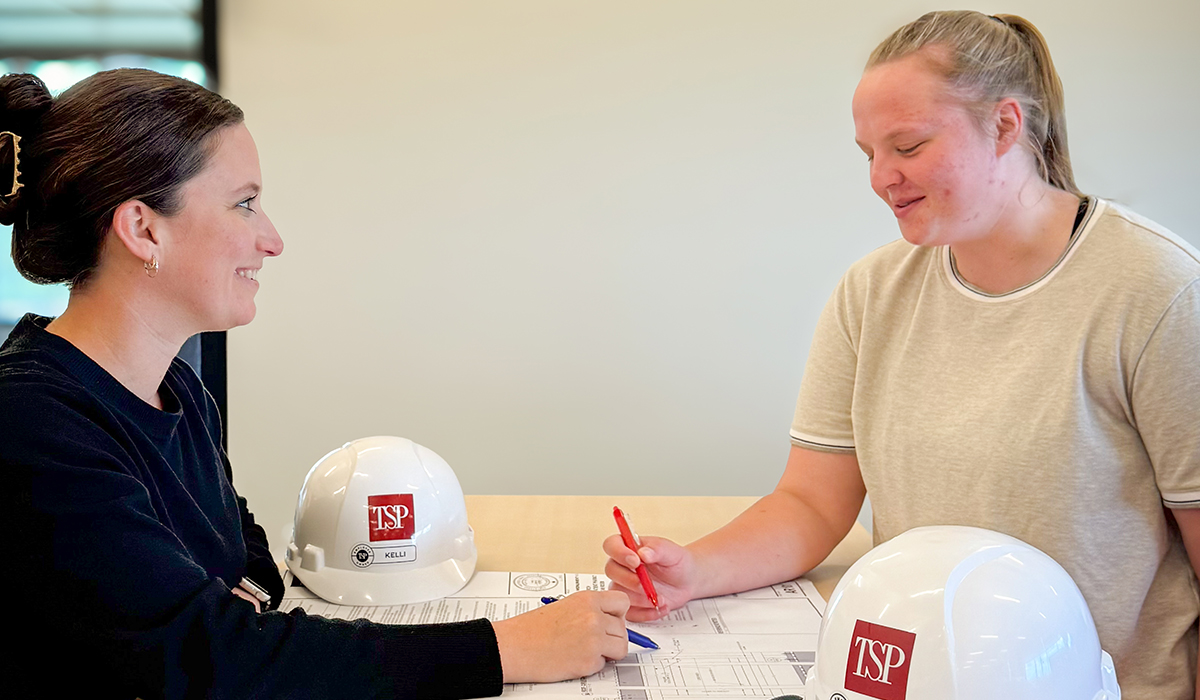
From left to right: Kelli Osterloo and Emily Maile.
For Structural Engineer-in-Training Helen Squyer, a curiosity about engineering was introduced much earlier. Her mother’s career as an architect gave her countless opportunities to observe projects, visit job sites, and ask questions about how buildings came together.
“Eventually, the questions I asked my mom became more about how the building was being assembled,” she said.
That curiosity ultimately led her to structural engineering.
While engineering education provides the foundation, real-world projects bring a different level of excitement. Maile notes that classroom assignments are often theoretical, while professional work results in projects that will one day be built and used by real people.
That connection to communities is one of the most rewarding aspects of the profession.
For Director of Practice Kelli Osterloo, no two days are the same.
On the same day, her work may range from designing healthcare facilities to supporting a research laboratory located 4,850 feet underground.
She balances technical engineering responsibilities with project management and firm leadership, helping guide both project success and client relationships.
“The variety of work keeps every day interesting,” she said.
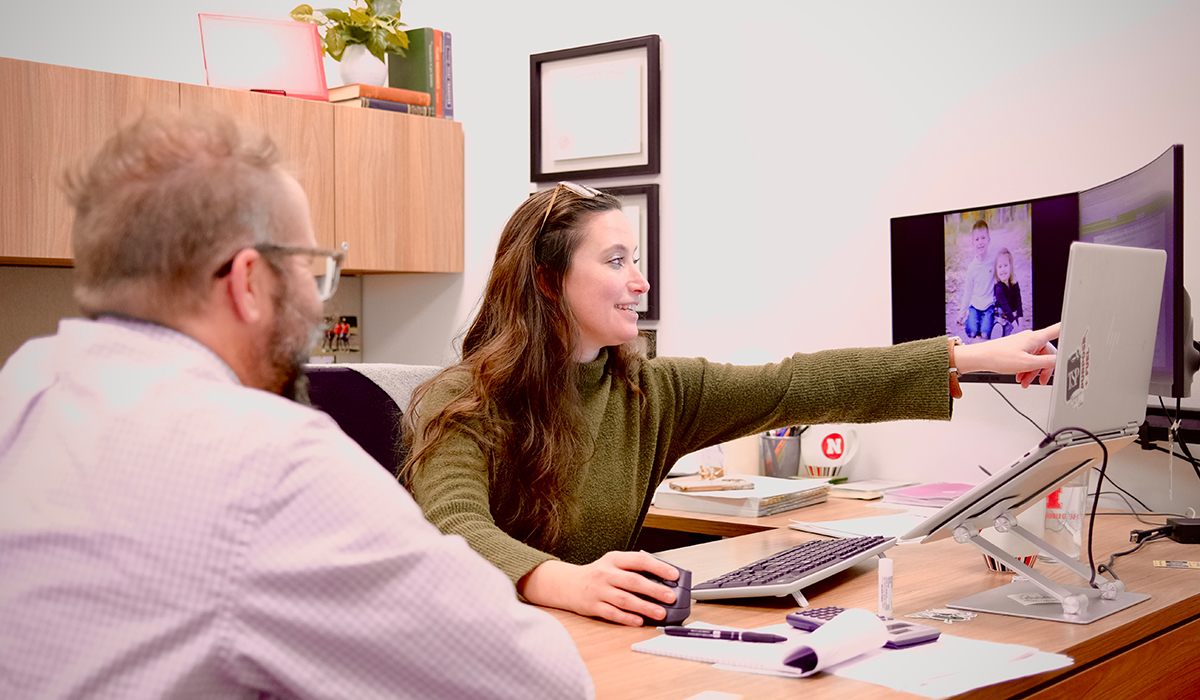
The impact engineers have on a project is often invisible to the people who use the finished space.
Electrical Engineer Carly Nord points out that many of the most important design decisions happen behind the scenes.
One project she recalls involved a school addition with a storm shelter. Rather than using a traditional generator, she chose an inverter-based backup solution that better fit the site’s constraints, creating a cleaner and safer design while reducing long-term complications for the owner.
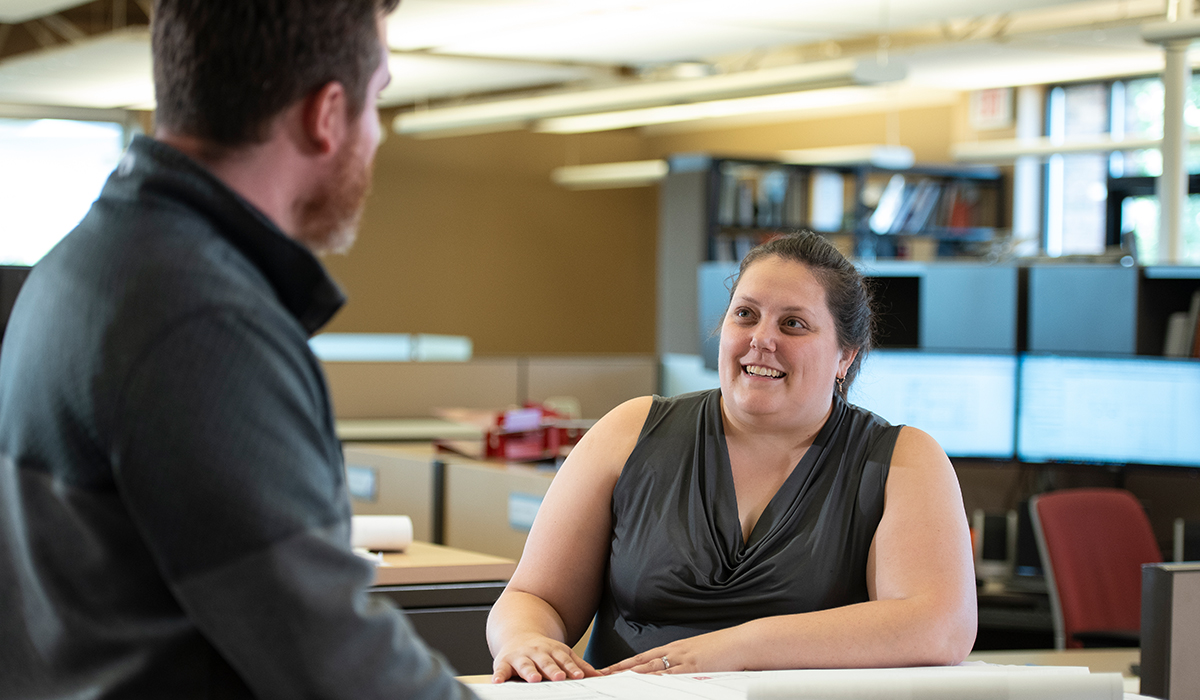
Even in everyday situations, engineers often see the world differently. Nord admits she notices lighting almost immediately when entering a building, paying attention to light distribution, fixture selection, and glare control.
“If it’s done well, most people don’t think twice about it,” she said. “But that balance takes a lot of intention.”
Mechanical Engineer Sidney Van Schepen shares a similar perspective.
While many people associate HVAC with temperature control, she points out that mechanical engineers are equally focused on indoor air quality, fresh air delivery, and energy efficiency, factors that significantly affect occupant health and comfort.
The profession also depends heavily on teamwork and mentorship.
Jenna Harrison, a Mechanical Engineer-in-Training, credits experienced TSP colleagues with helping her develop both technical skills and sound professional judgment. One lesson that has stayed with her is that there is rarely a one-size-fits-all solution to any challenge.
Instead, successful engineering requires understanding context, evaluating options, and finding solutions that best serve clients, contractors, project teams, and communities.
That collaborative spirit is something Squyer sees reflected every time she drives by a completed project.
“No project is easy or perfect,” she said. “Between design and construction, an incredible amount of collaboration and problem-solving happens. It’s amazing to see all of that wrapped up in a finished building.”
Looking ahead, these engineers see tremendous opportunity for innovation. Nord is excited about increasingly connected and intelligent buildings, where electrical systems support energy efficiency, advanced controls, and adaptable environments that better serve occupants.

From left to right: Sidney Van Schepen, Carly Nord, Jenna Harrison, and Helen Squyer.
At the same time, the profession continues to offer opportunities for future generations.
Maile encourages students interested in engineering to explore the field, noting that the profession develops valuable skills in problem-solving, teamwork, and critical thinking while offering countless career paths.
Whether designing structures, mechanical systems, electrical infrastructure, or leading complex projects, these women share a common goal: creating spaces and systems that strengthen communities. Much of their work may go unnoticed by the public, but its impact is experienced every day.


